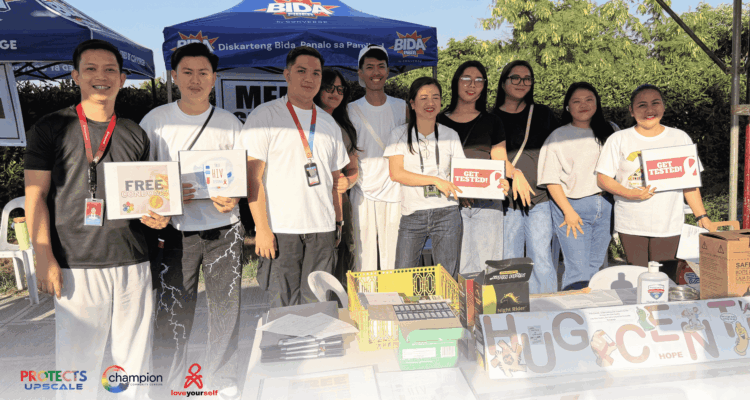
Across the first quarter of 2026, Champion Community Centers strengthened access to HIV prevention, testing, treatment linkage, and community-based support services across the Philippines, reaching thousands of individuals through strategic partnerships, outreach initiatives, and community-centered programs.
From January to March 2026, Champion Community Centers collectively reached 22,438 key populations (KPs), with 21,757 individuals tested for HIV, reflecting strong demand generation and service delivery efforts nationwide. The network recorded a 2.78% reactivity rate and successfully enrolled 5,271 individuals in PrEP (Pre-Exposure Prophylaxis), reinforcing its commitment to HIV prevention and biomedical intervention access.
These accomplishments were made possible through the engagement of 39 community-based organizations (CBOs) and the continued collaboration of local government units, health offices, academic institutions, and volunteers.
Regional Performance Highlights
Several regions emerged as top contributors to HIV testing outputs during Q1:
Region XII – 56.01%
Region IV-B (MIMAROPA) – 51.50%
Region VI – 41.58%
Negros Island Region (NIR) – 39.91%
Region III – 34.70%
These results reflect the strength of localized, community-led responses in addressing gaps in HIV prevention and care.
Major Activities Across the Country
Champion Community Centers sustained strong community engagement in the first quarter of 2026 through a series of outreach activities, partnerships, and service expansion initiatives nationwide. In Pampanga, KAWUL Inc. partnered with the City Health Office of San Fernando during KAYABE FEST at Mega World Capital Town, providing HIV and syphilis testing, condom and lubricant distribution, PrEP screening, and health education during a high-traffic city event. In the same region, ABE by LoveYourself successfully completed its Primary Healthcare Facility reaccreditation through the Central Luzon Center for Health Development, reinforcing its commitment to quality, client-centered sexual health services. Meanwhile, a new milestone was reached with the launch of the ORANGE Community Center in Parañaque through the partnership of DIOSSA, LoveYourself, and OWWA, expanding access to free sexual and mental health services for Filipino seafarers, migrant workers, and their families.
Across other regions, community centers continued bringing HIV services closer to local communities through campus activities, festivals, and community gatherings. The LGBT Davao City Coalition, through Higala Community Center, conducted HIV education and screening at Davao Central College-Toril, engaging over 1,000 attendees and successfully counseling and testing 210 clients. Amos Tara Community Center hosted the Feb-Ibig sa Amos celebration in Puerto Princesa, combining community-building activities with HIV testing services for 30 clients. In Metro Manila, Poikilos Community Center, in partnership with FPOP Metro Manila and UP Diliman Gender and Development Office, delivered a whole-day campus outreach that included HIV and syphilis testing, family planning services, PrEP initiation, and health education. Other highlights included Ai Keire Support Group Inc.’s three-day HIV/STI outreach during Kanlahi Festival 2026 in Tarlac, GentleMen Bicol’s HIV awareness session and screening in Naga City, and KAAGBAI Philippines’ outreach relaunch in partnership with SHIP, successfully engaging persons who inject drugs and expanding access to essential HIV services for vulnerable communities.
Sustaining Community-Led Impact
Quarter 1 highlights the continued importance of community-led, decentralized HIV services in reaching populations that may otherwise have limited access to care. Through outreach events, institutional partnerships, service expansion, and community engagement, Champion Community Centers remain committed to strengthening HIV prevention ecosystems and advancing health equity nationwide.
As 2026 progresses, Champion Community Centers will continue expanding access to testing, prevention, treatment linkage, and safer spaces—bringing health services closer to the communities that need them most.